
Fall Reset: What Worked, What Didn't
There’s a particular quiet that shows up on a small place in late September. The mornings cool off. The light softens. You walk the same paths you walked in June and notice what’s still giving — and what’s already gone.
We’re not writing this as a scoreboard. On 2.6 acres around a 1910 farmhouse in Franklin, Kentucky, fall isn’t a victory lap. It’s a reset. A chance to tell the truth about the season: what still produced, what failed, and what we’re carrying into cooler weather with clearer eyes.
If you tend a little land — or just a porch and a pantry — this is for you.
The real picture of the season
A young family homestead doesn’t run on perfect plans. It runs on evenings after work, weekends that get interrupted, and the honest limit of two adults trying to grow food, keep house, and raise a family without turning the place into a performance.
This year looked like a lot of years on small places: some beds stayed productive longer than we expected. Some crops we counted on never quite found their rhythm. A few “sure things” reminded us they aren’t sure. Weather did what weather does. Time did what time does when school starts and the days shorten.
We aim, over time, to grow a larger share of what we eat — something in the neighborhood of most of our food, if the land and our hands allow. We’re not there yet, and pretending otherwise wouldn’t help anyone. Fall is when that gap gets clearer. Not shameful. Just clear.
What we’re left with isn’t a spreadsheet. It’s a walk around the property: what’s still green, what’s going to seed, what’s already compost-bound, and what’s worth another try next spring.
What failed (or didn’t finish)
Some failures are loud. Ours were mostly quiet.
A couple of plantings never took off the way we hoped — thin stands, slow growth, the kind of underwhelming result that doesn’t make a good photo and doesn’t need one. We lost ground to weeds in spots where we got behind. A few preservation plans stayed on the list longer than they stayed realistic. Things we meant to “get to this weekend” slid into next weekend, then into “maybe next year.”
None of that is unique. Homesteading literature sometimes skips the part where a young family runs out of daylight before the to-do list does. We don’t want to skip it.
The useful part of failure isn’t the embarrassment. It’s the pattern. When something failed, we try to ask: Was it the seed, the bed, the timing, the water, or just that we didn’t have the hours? Sometimes the answer is “all of the above.” Sometimes it’s simply that this acre and this season asked for something we couldn’t give yet.
We’re not naming every miss in public detail — partly because our kids live here too, and their home isn’t content. Partly because the point isn’t a catalog of flops. The point is honesty: some things didn’t work, and that’s part of stewardship, not proof we should quit.
What still produced (and what we’re glad we did)
Not everything struggled. Some beds kept giving into the cooler stretch — the late, steady producers that make a small place feel worthwhile even when the big plans shrink. A few preservation habits stuck: putting something up when we had it, instead of waiting for a perfect batch day that never comes. Wood and season prep that did get done made the property feel more ready, even if the list isn’t finished.
We’re also glad for the quieter wins: meals that came partly from here; soil we improved a little; fences and edges we paid attention to before they became bigger problems. Wins on a homestead this size often look ordinary. Ordinary is fine. Ordinary is how food actually gets to the table.
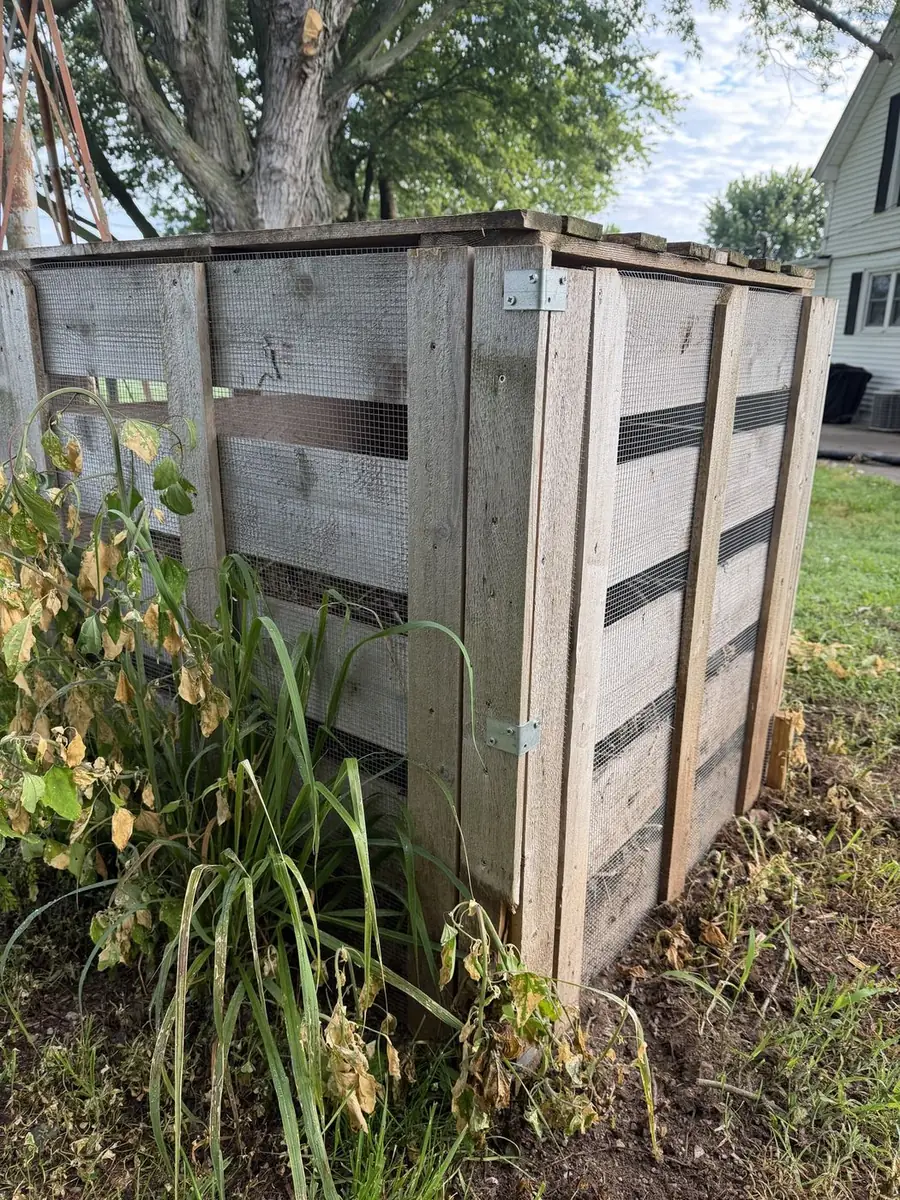
If there’s a theme to what worked, it’s this: smaller scopes, finished more often, beat ambitious plans left half-done. The projects that matched our real capacity — not our winter daydreams — were the ones that still show something on the land. The cedar compost bin is one of those: finished, in use, and quietly turning scraps into next year’s soil.
One transferable practice
Here’s the practice we’re taking into fall, and the one we’d hand to a neighbor:
Before the first hard frost, walk your place once with a notepad (or your phone notes) and write two short lists — only two.
List A: Still producing / still useful.
List B: Failed, faded, or unfinished — and the most likely reason in one line.
Then circle one item on List A to keep tending, and one item on List B to either fix simply or release without guilt. Not ten items. One and one.
That’s it. No new system. No fancy planner required. Just a clear-eyed reset so winter doesn’t inherit a fog of half-remembered intentions.
We’ve found that the act of naming — what worked, what didn’t — does more for next season than another late-night scroll through someone else’s perfect garden. Your place has its own weather, its own soil, its own family. The walk tells the truth better than a highlight reel.
If you want a soft next step after the walk: put one jar, one meal, or one small bed task on this week’s calendar. Finish that. Then stop. Stewardship scales better when it’s finishable.
Closing
Fall on a small Kentucky homestead isn’t glamorous. It’s honest light on honest ground. Some things grew. Some things didn’t. We’re still here — grateful for what the land gave, humble about what it withheld, and hopeful enough to try again with clearer hands.
If faith has a place in this for us, it’s not as a speech. It’s as a quiet thanks for daily bread, for the chance to tend a little corner of creation, and for the mercy of seasons that let us start over without pretending last season was perfect.
Wherever you are reading this — porch, kitchen table, or the end of a long day — may your own fall reset be truthful, gentle, and enough.
— Derek, Layton Farms · Franklin, Kentucky